


Understanding Cube Puzzles
Cube puzzles are some of our most popular 3D wooden puzzles and brain teasers, and it’s no wonder why. There is something innately delightful about a complex array of geometric and spatial reasoning challenges all packed into a convenient little cube. It’s as satisfying to take apart as it is to put back together. They offer the ability to finish a puzzle and have a perfectly cut square of beautiful monkey-pod wood to display, and the chance to attempt it again at any time.
Another great feature of cube puzzles is their variety. They come in so many different forms with varying objectives to inspire the user in brand-new ways. What’s even more fascinating is how different cube puzzles that look strikingly similar can still be vastly different, while offering unique and distinct problems to solve.
Soma Cube Puzzle
One of the oldest and most classic examples of a cube puzzle is the Soma cube, which was invented in the 1930s by Piet Hein, and has gone on to become incredibly popular in the near century since (read more on the history and origins of the Soma cube here). Countless other types of cube puzzles have drawn inspiration from the Soma cube. From the Rubik’s cube to the Serpent Cube, it is common for different cube puzzles to have independent processes and challenges, all the while maintaining the common cube shape. The Soma cube is very popular and is the quintessential cube puzzle, so much so, that our version of it is simply called, Cube Puzzle. The objective of the Soma cube is simple: complete it by taking the cube apart and reassembling it with all seven of its pieces arranged to fit back inside the original case.
Vegas Baby
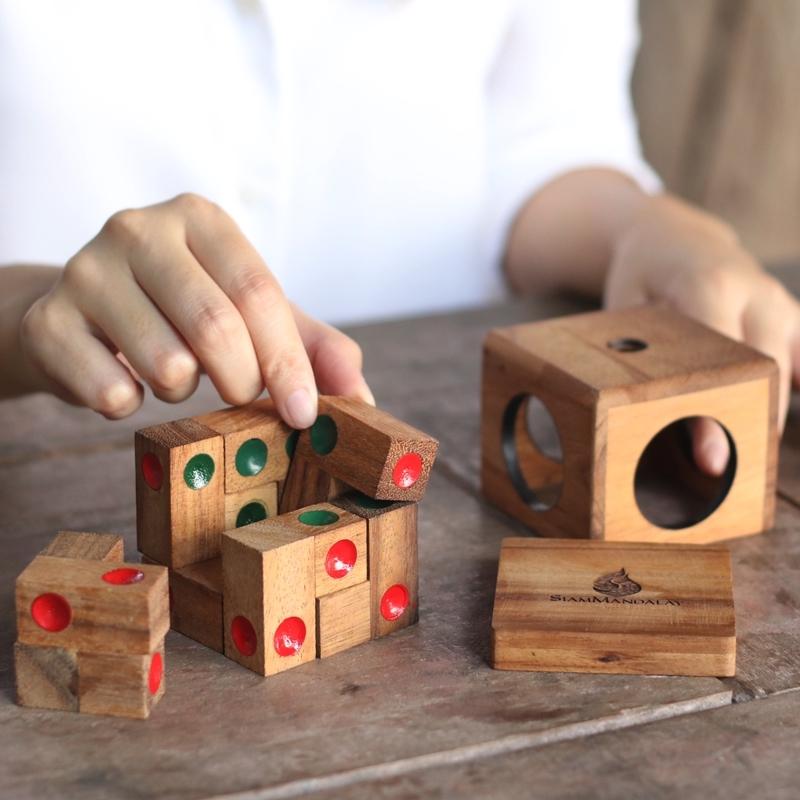
Some cube puzzles draw more similarities to the Soma cube than others. One of our puzzles in particular, Vegas Baby, has some obvious similarities to the Soma cube, even down to the method in which it is completed. Like a Soma cube, Vegas Baby begins as a fully constructed cube made of pieces that compose a 3x3x3 structure of smaller unit-cubes; all of which are contained inside a wooden case. For the Cube Puzzle, you must take apart the cube and place the pieces in the proper places to rebuild the cube shape. On the surface, Vegas Baby looks very similar. It contains similarly shaped pieces, is composed of 27 unit-cubes, and the goal is to assemble all the pieces in the right positions and form it all back into a three-dimensional square. However, with Vegas Baby, there is a catch. Rather than simply reconstructing the cube, you must also align each of the pieces in the proper position to mimic the faces of a die. Each face of the cube must display a different number of dots from 1-6, resembling the same dot pattern you would find on a die.
The Differences Between Them
Simply watching the actions required to solve each puzzle might make it seem as though the puzzles behave the same. Similar shapes, similar concept, similar construction, however each puzzle brings important nuance and challenges to the table that allow for completely different and individually valuable puzzling experiences. In this blog we are going to cover some of the important differences between these two puzzles to highlight what makes each of them a unique and worthwhile pursuit.
Most importantly, we must mention the number and composition of each puzzles’ pieces. The Cube Puzzle has seven pieces whereas Vegas Baby has nine. This may appear to be merely a superficial distinction; however, this is where many of the key differences within the puzzles lie. Due to the fact that both puzzles are composed of 27 smaller unit-cubes that come together to form the same shape, differing numbers of pieces completely change the way you have to think about putting them together. All of Vegas Baby’s pieces are the same L-shape, composed of three unit-cubes. Where they differ is in the number, color, and location of the dots that they have on them. This means that when attempting to complete the puzzle, the overall structure of the greater 3x3x3 cube comes together rather easily. The difficulties come from trying to align all the pieces in the proper arrangement to recreate the faces of a die. Whereas with the Cube Puzzle, the pieces vary in structure, ranging from three to four unit-cubes per piece with all different kinds of shapes. This presents a greater challenge when trying to reassemble the shape of the cube itself.
These differing styles of pieces present their own challenges, and demand that the puzzler approach each one with a different mindset. When attempting the Cube Puzzle, it is often best to utilize a bottom-up approach; to begin building the cube by thinking about it in layers. Building up from the bottom layer with the available shapes and seeing what fits where. It is beneficial to consider rotating and reorienting the cube to see how the pieces and their fit may change. Contrarily, with Vegas Baby, it is much more advantageous to look at it from the outside-in. Visualizing and recreating the faces of the die, positioning the pieces so that the dots are not only on the right side, but in the proper location, is the only way to solve this puzzle. It’s necessary to factor in each piece’s dots on multiple faces. A single piece can have dots displayed on as many as three different faces of the larger cube, keeping in mind all the implications of every piece's positioning is a tall task. Keeping all the dots in mind, understanding which positions and faces the dots are displayed on is critical to mapping out the rest of the puzzle.
Conclusion
Each of these puzzles is special and distinctive from each other, and other cube puzzles. What's consistent throughout them is that they present a fun and interesting challenge. The differences between them are what make them so fascinating. An opportunity to improve and work on spatial reasoning skills with the Soma cube puzzle is great. But being able to continue to build on those skills in a different form, like with Vegas Baby, and with a different thought process is what makes them such great brainteasers. There are no tangible hard skills to be taken away from completing the Soma cube, that can then be brought over and applied to Vegas Baby. However, the soft skills, the different ways of thinking, and the problem-solving practice gained from completing one of the puzzles can easily translate to success with the other. Just like how practicing with both cube puzzles can help improve critical thinking, problem solving, and analysis skills that are helpful in everyday life or school.
Sold out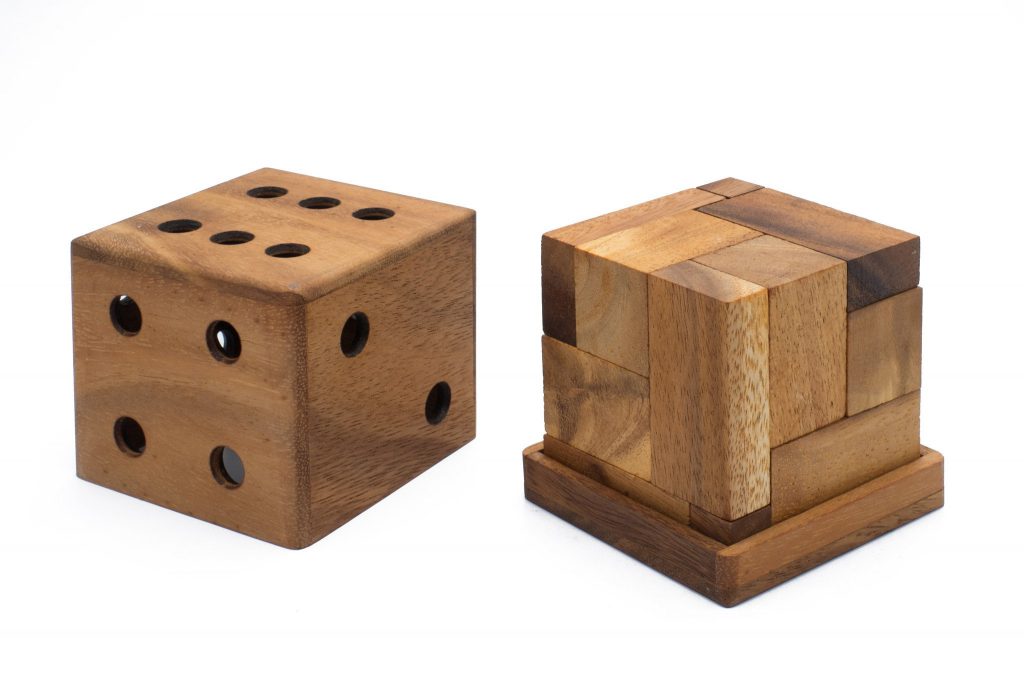 Read more
Add to wishlist
Read more
Add to wishlist
High Roller
$24.99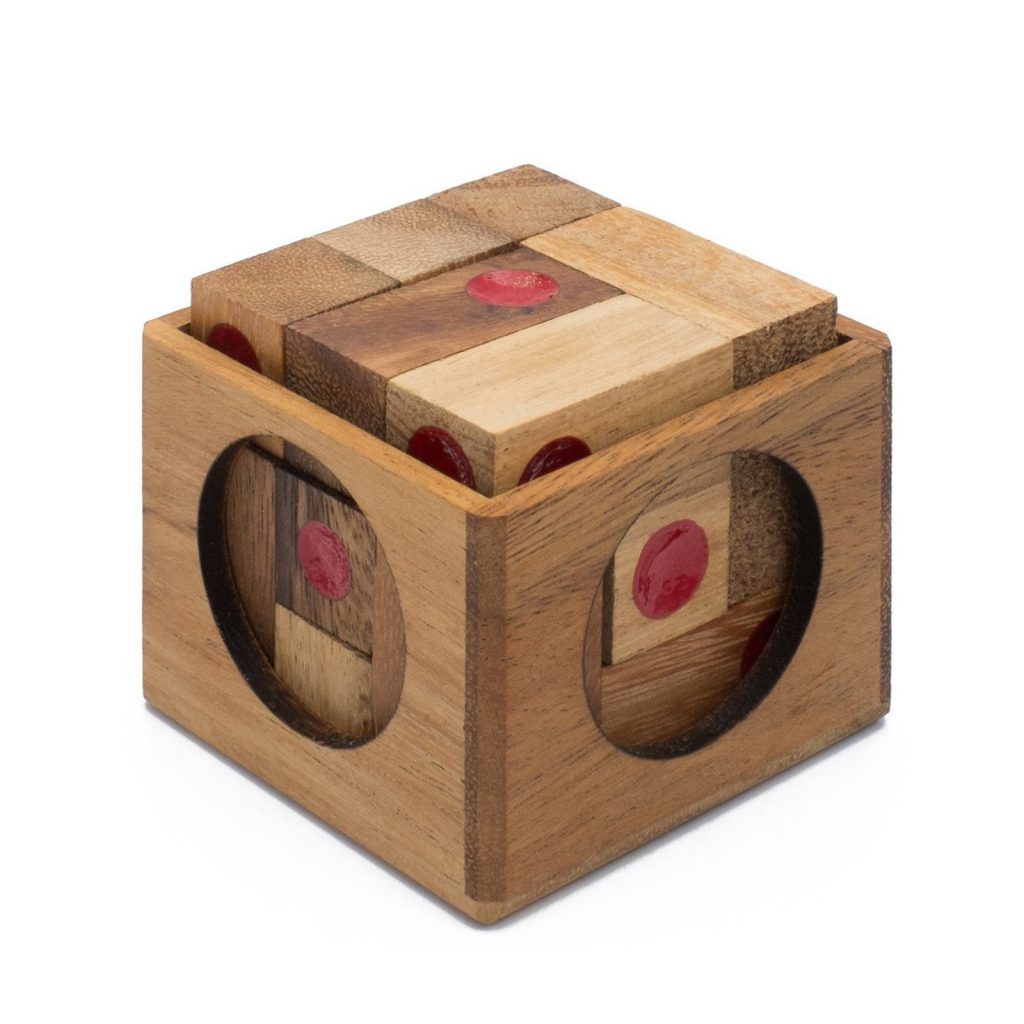
 Add to cart
Add to wishlist
Add to cart
Add to wishlist